School nutrition has seen dramatic changes since 2004 when federal legislation first tackled childhood obesity. Many parents still find school food policies confusing and hard to follow. The year 2025 marked a significant milestone – obesity cases worldwide exceeded underweight cases for the first time, making these regulations more vital than ever.
Better school lunch programs started their transformation in 2004 with the Child Nutrition and WIC Reauthorization Act that made wellness policies mandatory. The Healthy, Hunger-Free Kids Act of 2010 later strengthened these requirements. A federal law (PL 108.265 section 204) took effect on July 1, 2006, requiring schools in USDA Child Nutrition programs to create policies that reduce childhood obesity. The USDA stepped up these efforts in 2016 by releasing final regulations for Local School Wellness Policy (LSWP), which became required after June 30, 2017.
This piece breaks down these wellness policies’ actual content and their impact on your child’s daily nutrition. Parents need to understand these guidelines. You’ll find detailed requirements and wellness policy templates that help you promote positive changes at your child’s school.
Understanding the School Wellness Policy
School wellness policies are the foundations of nutritional wellness initiatives in educational settings throughout America. A local school wellness policy guides a school district through written documentation to create supportive nutrition and physical activity environments that help students stay healthy and learn better.
Each school can craft these policies at the local level to meet its unique needs. Schools cannot create random policies despite this flexibility. Federal Child Nutrition Programs require all participating districts to follow specific guidelines.
Districts with strong wellness policies see clear benefits. Their schools have higher breakfast participation rates (28% compared to 19% in schools without policies). Students in these schools also enjoy their breakfast more (69% versus 54%).
These policies need specific elements to work well. Schools must set goals for nutrition promotion and education. They need physical activity guidelines and nutrition standards for all foods available during school hours. The policies should also restrict marketing to foods that meet Smart Snacks standards.
These policies do more than just fill paperwork requirements. They have improved school meals’ nutritional quality by a lot. School lunch now provides American children with their healthiest meal of the day. Research shows these improvements help reduce obesity risk among low-income children.
Key Components of Nutritional Wellness in Schools
School nutrition and wellness programs include several connected elements. Federal requirements make schools stop marketing foods and beverages that don’t meet USDA Smart Snacks standards. All the same, the industry finds adaptation challenging, as shown by “copycat” foods with improved nutrition made just for school lunches.
Quality nutrition education plays a vital role, but U.S. students get nowhere near enough instruction – less than 8 hours yearly compared to the 40-50 hours needed to change behavior. Schools can blend nutrition lessons into regular subjects through creative ways like counting with fruit pictures or learning fractions through recipes.
Physical activity programs serve as the third key element and help students reach their target of 60 minutes of daily physical activity. Detailed programs feature quality physical education, recess policies, and activities before and after school.
Schools have launched creative wellness activities, such as:
- Student-created wellness video messages
- Running clubs and garden programs
- Cooking workshops that teach nutrition through hands-on experiences
On top of that, recent updates to nutrition standards target lower levels of added sugars and sodium in school meals. These step-by-step improvements want to boost children’s health without affecting taste, since school meals often provide the most nutritious food many children eat each day.
How Schools Implement and Monitor Wellness Policies
Schools need a well-laid-out process to implement lunch wellness policies and review their progress. Local educational agencies that participate in the National School Lunch Program must review their wellness policy every three years. The review looks at three main aspects:
- Compliance with the wellness policy
- How the policy measures up to model wellness policies
- The goals achieved under the policy
State agencies check if schools follow wellness policy requirements during their administrative reviews. Schools need to keep records of their current policy, proof of public availability, and their latest implementation review.
Success depends on creating wellness committees that represent everyone. The core team should include administrators, food service staff, physical education teachers, parents, school board members, health professionals, students, and community members.
Schools can use tools like WellSAT 3.0 to measure their written policies. Organizations like the Alliance for a Healthier Generation and USDA’s Team Nutrition offer helpful resources such as action plan templates and outreach toolkits.
Schools must share their wellness policies and assessment results with the public. This transparency will give a clear picture of nutritional wellness priorities and help communities track progress toward healthier school environments.
Conclusion
School wellness policies do more than meet bureaucratic requirements. They are vital tools that shape our children’s nutritional environment at school. Parents should without doubt know these policies well, since school meals now provide the healthiest food many American children eat during their day.
Nutritional standards have improved by a lot since 2004, though obstacles still exist. School districts need to balance nutrition guidelines with student priorities while working with tight budgets and resources. Schools with detailed wellness policies show better student outcomes.
What does this mean for parents? You have the right and duty to know what your child eats at school. Wellness policies and assessment results must be publicly available, giving you access to vital information about your child’s school nutrition standards. It also helps that wellness committees welcome parents, giving you a chance to shape school nutrition decisions.
School nutrition will keep changing as scientific knowledge grows and dietary guidelines evolve. The steady decrease in sodium and added sugar shows just one part of this ongoing trip. Perfect nutrition remains a goal to strive for, but each improvement helps students build lasting healthy habits.
Note that nutritional wellness goes beyond following rules. The best school nutrition programs encourage environments where students naturally choose healthy options. This mix of following policy while genuinely promoting nutritional wellness builds the foundation for healthier future generations.
FAQs
Q1. Are school lunches nutritious enough for children? School lunches have significantly improved in nutritional quality. Recent studies show that school meals now provide the healthiest food many American children consume throughout their day, contributing to a decrease in obesity risk among low-income children.
Q2. What are the key components of school wellness policies? School wellness policies typically include goals for nutrition promotion and education, physical activity guidelines, nutrition standards for all foods available during school hours, and restrictions on marketing only foods that meet Smart Snacks standards.
Q3. How often are school wellness policies evaluated? Schools are required to conduct an assessment of their wellness policy at least once every three years. This triennial assessment evaluates compliance with the policy, compares it to model policies, and measures progress in achieving the policy’s goals.
Q4. Can parents get involved in shaping school nutrition policies? Yes, parents can participate in school wellness committees, which typically include administrators, food service staff, teachers, parents, and other community members. These committees play a crucial role in developing and implementing school wellness policies.
Q5. What constitutes a healthy school lunch? A healthy school lunch should be balanced and include a variety of food groups. It might consist of items like whole grains, lean proteins, fruits, vegetables, and low-fat dairy. The specific composition may vary, but the focus is on providing nutritious options that meet federal guidelines while appealing to students’ tastes.
AlphaTechs USA offers a wide selection of innovative solutions designed to improve school lunch experience and make school lunch lines go faster.
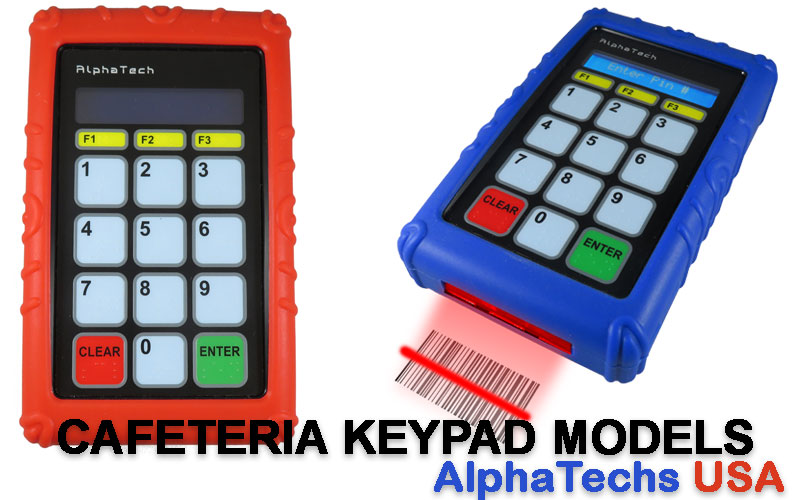
Specifically created for US school cafeterias, our pin pads, 1D scanners and 1D/2D QR barcode scanners and RFID code readers are compatible with all school lunch POS systems. Each unit comes with a free complementary anti-shock cover designed to keep your devices safe at all time.
Stand-alone readers are also available including orbital scanners, USB handheld barcode scanners as well as Bluetooth handheld barcode scanners.
Our devices are compatible with all US school cafeteria POS systems.
For any school cafeteria scanner question, feel free to contact us.
References
[1] – https://www.fns.usda.gov/tn/wellness-policy
[2] – https://www.fns.usda.gov/cn/local-school-wellness-policy
[3] – https://www.cdc.gov/assessing-improving-school-health/wellness/index.html
[4] – https://healthyeatingresearch.org/wordpress/wp-content/uploads/2021/03/HER_SchoolMealsKeyFindings_03172020.pdf
[5] – https://www.frontiersin.org/journals/public-health/articles/10.3389/fpubh.2023.1143474/full
[6] – https://www.changelabsolutions.org/product/food-beverage-marketing-school-wellness-policies
[7] – https://www.heart.org/-/media/Files/About-Us/Policy-Research/Policy-Positions/Healthy-Children-and-Schools/Food-Marketing-Policy-Statement-2024.pdf?sc_lang=en
[8] – https://www.cdc.gov/school-nutrition/education/index.html
[9] – https://www.cdc.gov/physical-activity/php/strategies/school-and-youth-programs.html
[10] – https://www.actionforhealthykids.org/activity/comprehensive-school-physical-activity-programs/
[11] – https://www.healthparkpediatrics.com/health-and-wellness-activities-for-elementary-students/
[12] – https://www.fns.usda.gov/cn/school-nutrition-standards-updates
[13] – https://www.fns.usda.gov/tn/wellness-policy/implementation-tools
[14] – https://education.mn.gov/mdeprod/idcplg?IdcService=GET_FILE&dDocName=MDE058904&RevisionSelectionMethod=latestReleased&Rendition=primary