
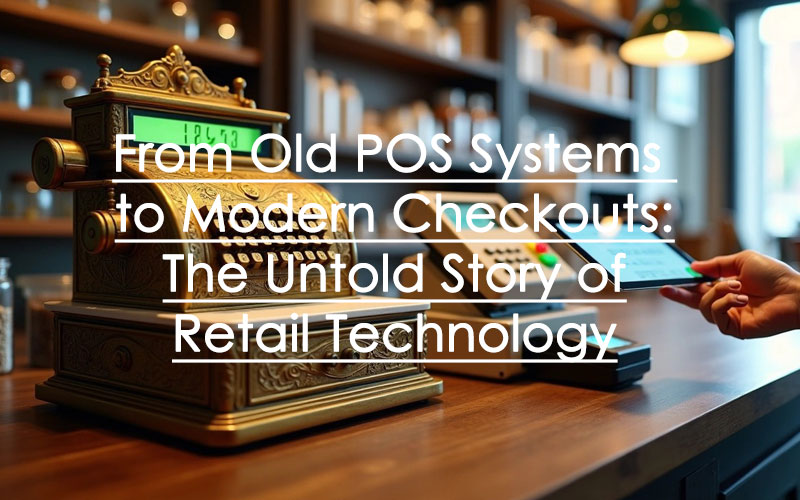
Old pos systems trace their roots back to a surprising problem: a saloon owner couldn’t stop money from disappearing. James Ritty invented the first mechanical cash register in 1879 to prevent theft at his Dayton, Ohio bar. That simple solution sparked a retail revolution spanning over 140 years.
That first pos mechanical register evolved into today’s cloud-based platforms, and the transformation has been remarkable. I’ll walk you through the complete progress of these systems in this piece. We’ll get into how the old pos system evolved from simple transaction recording to sophisticated business intelligence tools and how old restaurant pos systems pioneered touchscreen technology. You’ll also discover what’s coming next for modern retail checkouts.
The Birth of Mechanical Cash Registers: Solving Theft in the 1800s
The First Automated Banking Machines
American businesses faced a growing challenge after the Civil War as cities expanded and merchants hired unfamiliar clerks more often. Employees could pocket cash meant for the business without proper accountability systems, and records kept on simple paper slips proved unreliable [1].
James Ritty’s Incorruptible Cashier (1879)
James Ritty owned a saloon in Dayton, Ohio, where he dealt in fine whiskies and cigars. Employee theft frustrated him enough that during an 1878 steamboat trip to Europe, he found himself studying a mechanism that counted the ship’s propeller revolutions [2]. He reasoned that if a device could track mechanical rotations, why couldn’t one count money?
Ritty enlisted his brother John, a skilled mechanic, to build prototypes back in Dayton. Their first two attempts failed, but the third design succeeded. Pressing keys representing specific dollar amounts added transactions to a dial display with hands showing dollars and cents [2]. The manager could compare this total against actual cash in the till to spot discrepancies. The brothers patented their invention as “Cash Register and Indicator” on November 4, 1879 [2]. They branded their commercial model as “Ritty’s Incorruptible Cashier” and opened a small factory on South Main Street [3].
The National Cash Register Company Takes Over
Running both a saloon and manufacturing operation overwhelmed Ritty. He sold his interests to investors including Jacob H. Eckert in 1881, a Cincinnati china and glassware salesman who formed the National Manufacturing Company [2]. John and Frank Patterson, who ran a coal and railroad business, were among the early buyers.
John H. Patterson became majority owner in 1884 and renamed the company National Cash Register Company [2]. Patterson changed the old pos system from a simple device into an industry standard. He introduced aggressive sales methods and added significant features like paper receipt rolls for internal bookkeeping [4]. Eighty-four companies sold cash registers between 1888 and 1895, but only three survived [4].
Electric Motors Speed Up Transactions (1906)
Charles F. Kettering designed the first cash register powered by an electric motor in 1906, just two years after being hired [5]. The old pos required manual cranks to operate mechanical accounting tools before this breakthrough. Kettering also developed the Class 1000 machine, a redesigned register that remained in production for 40 years with only minor changes [5]. NCR had sold a million machines by 1911 [6].
Key Features of Early Cash Registers
Early registers included bells that rang with each transaction and confirmed to customers and owners that sales were recorded. The automatic cash drawer secured money, while printed receipts allowed merchants to verify that clerks charged correct amounts and prevented embezzlement [4].
The First POS: When Computers Entered Retail
The First Automated Banking Machines
Cash registers remained mechanical for decades until computers entered the picture. IBM changed the game.
IBM’s Electronic Cash Register (1973)
IBM released the first computer-powered cash register in 1973 and packaged mainframe technology as a store system [7]. This wasn’t just faster hardware. The system could network up to 128 registers and record all sales data in a central repository [8]. Retailers could track which items sold best and generate summary reports without manual work for the first time [5]. The IBM 3650 and 3660 store systems introduced client-server technology, peer-to-peer communications and local area network capabilities that defined modern POS architecture [6].
Restaurant Systems Lead Innovation
Old restaurant pos systems expanded faster than retail. Gene Mosher, a New York restaurateur, wrote software in 1979 that let customers order at his deli’s entrance while the kitchen received printed tickets [5]. McDonald’s recognized the potential early and rolled out POS terminals at locations in 1984 that integrated ordering with payment processing [7]. William Brobeck created a microprocessor-powered register for McDonald’s in 1974 with dedicated buttons for every menu item, which sped up order entry [6].
Touchscreen Interfaces Arrive (1980s)
Mosher introduced the first color touchscreen POS in 1985 that ran on the Atari ST computer [5]. His ViewTouch software featured a widget-driven interface where managers could configure menu items without programming knowledge [6]. The system debuted at Fall Comdex 1986 in Las Vegas and installed in several US and Canadian restaurants [6]. This transformed how staff interacted with old pos systems and replaced keyboards with accessible visual controls.
PC-Based Systems Change Everything (1990s)
Microsoft launched Windows-based POS software in 1992 and made the first pos available to businesses of all sizes [7]. EPOS platforms united sales tracking and inventory management into unified systems [7]. Retailers could mix software with varied hardware choices, which ended dependence on proprietary solutions [9].
Cloud Technology and Mobile Payments Reshape Commerce
The First Automated Banking Machines
The internet changed what old pos systems could do. Businesses could now access everything through web browsers instead of installing software on expensive local servers.
Software-as-a-Service Replaces Hardware
Software-as-a-Service changed the old pos model to subscriptions in the early 2000s. Restaurants paid between $50 and $150 monthly instead of thousands upfront for hardware [10]. The adoption happened fast. Among restaurant segments, 95% of food trucks welcomed SaaS platforms [10]. 60% of new merchants requested cloud-based systems [10]. School cafeteria pos systems were also adopted across the US, making it easier for students to pay lunch using their school IDs or cafeteria cards.
Data lived on remote servers rather than vulnerable local computers. Restaurateurs could check sales reports from home. Software updates happened without technician visits. Offline modes kept transactions running until smooth connections resumed if internet dropped.
Mobile POS Breaks Free from Counters
Tablets and smartphones freed the old restaurant pos systems from fixed counters. Staff walked the sales floor with handheld devices that featured built-in barcode scanners and payment terminals. Servers took tableside orders that printed in kitchens, while retailers processed purchases anywhere in their stores. Battery life stretched through full shifts. Water-resistant designs handled splashes.
Contactless and Digital Wallets Take Hold
Near-field communication technology enabled tap-to-pay cards and phones. The 2020 pandemic pushed contactless transactions to grow over 40% in the first quarter alone [1]. These payments represented 30% of all point-of-sale transactions in the US in 2023 [11]. Mastercard surveys found 79% of global respondents using contactless methods [1], while 48% of American consumers had tapped digital wallets within 90 days of a 2024 survey [11]. Tokenization replaced actual card numbers with one-time codes and made mobile payments more secure than magnetic stripes.
Self-Service Kiosks Enter the Scene
Self-checkout appeared in 1984 but gained traction decades later [12]. 96% of grocery stores provide self-service options now [12], with 75.5% of all kiosks installed in retail environments [12]. Retailers reported that 91% believe these systems boost sales, as 77% of customers prefer them [12].
Modern Checkout Systems and the Future of Retail
The First Automated Banking Machines
Artificial intelligence has turned the old POS system into something far more capable than transaction processing. Machine learning entered retail and these platforms now analyze customer behavior patterns. They forecast demand with precision that outdated systems never approached.
AI and Predictive Analytics in Today’s POS
AI-powered platforms study historical sales data to predict inventory needs. This reduces both stockouts and overstock situations. Personalization drives measurable results and boosts sales by 10-15% according to McKinsey [13]. These systems suggest complementary products at checkout and adjust pricing based on demand. They detect fraudulent transactions by flagging unusual patterns. The National Retail Federation found that AI integration could reduce fraud-related losses by up to 25% [13].
Omnichannel Integration Connects All Sales
Modern systems unify in-store, online and mobile transactions into single customer profiles. Retailers using omnichannel customer engagement retain 89% of their customers. This compares to 33% for weak engagement [4]. Customers shopping across multiple channels have 30% higher lifetime value [4]. Omnichannel strategies increase conversion rates by over 20% [4].
Security Challenges and Solutions
PCI-DSS compliance remains mandatory for handling cardholder data. End-to-end encryption protects payment information from capture point to processor. Multi-factor authentication blocks unauthorized access. Cybersecurity threats have cost billions in data recovery and reputation damage [14].
Biometric Payments and What Comes Next
Fingerprint scanning, facial recognition and palm vein mapping are replacing passwords and PINs. The global biometric card market is expected to grow at nearly 118% between 2024 and 2029. It will reach almost $18.40 billion by 2029 [15].
Conclusion
The First Automated Banking Machines
What started as a simple solution to theft in a Dayton saloon has transformed into intelligent platforms that predict customer behavior and create tailored shopping experiences. We’ve witnessed significant progress from mechanical cash registers to AI-powered checkouts, in fact. This progress shows no signs of slowing. Biometric payments and predictive analytics will continue reshaping how we buy and sell. The experience from Ritty’s “Incorruptible Cashier” to today’s systems proves that retail technology adapts to solve real business challenges.
FAQs
The First Automated Banking Machines
Q1. Who invented the first cash register and why? James Ritty, a saloon owner from Dayton, Ohio, invented the first mechanical cash register in 1879. He created it to solve a persistent problem of employee theft at his bar. Inspired by a ship’s propeller counting mechanism during a trip to Europe, he worked with his brother John to develop a device that could track cash transactions and prevent employees from pocketing money.
Q2. When did computers first become part of retail checkout systems? IBM introduced the first computer-powered cash register in 1973, marking the transition from mechanical to electronic systems. This breakthrough allowed retailers to network up to 128 registers together, automatically track sales data, generate reports, and monitor which products sold best—capabilities that were impossible with purely mechanical registers.
Q3. How have cloud-based POS systems changed retail operations? Cloud-based POS systems shifted from expensive upfront hardware purchases to affordable monthly subscriptions, typically ranging from $50 to $150. These systems store data on remote servers, allow business owners to access sales reports from anywhere, provide automatic software updates, and continue operating offline when internet connections drop temporarily.
Q4. What percentage of consumers now use contactless payment methods? Contactless payments have seen significant adoption, with 79% of global consumers using contactless methods according to Mastercard surveys. In the United States specifically, contactless transactions represented 30% of all point-of-sale transactions by 2023, and 48% of American consumers had used digital wallets within 90 days of a 2024 survey.
Q5. How does artificial intelligence improve modern checkout systems? AI-powered checkout systems analyze historical sales data to predict inventory needs, suggest complementary products during transactions, and adjust pricing dynamically based on demand. These capabilities can boost sales by 10-15% through personalization and reduce fraud-related losses by up to 25% by detecting unusual transaction patterns.
AlphaTechs USA offers a wide selection of Innovative Scanners for School Cafeteria POS Systems
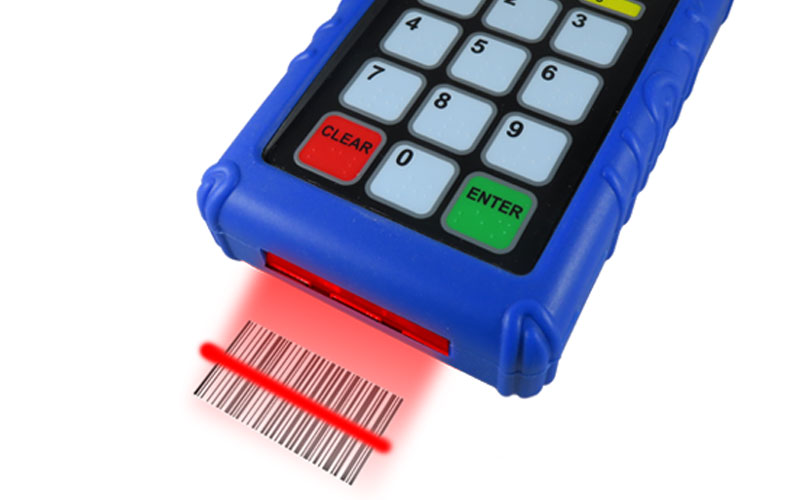
Specifically created for US school cafeterias, our pin pads, 1D scanners and 1D/2D QR barcode scanners and RFID code readers are compatible with all school lunch POS systems. Each unit comes with a free complementary anti-shock cover designed to keep your devices safe at all time.
Stand-alone readers are also available including orbital scanners, USB handheld barcode scanners as well as Bluetooth handheld barcode scanners.
For any school cafeteria POS scanner question, feel free to contact us.
References
[1] – https://www.mastercard.com/us/en/news-and-trends/Insights/2020/driving-contactless-payment-adoption.html
[2] – https://en.wikipedia.org/wiki/James_Ritty
[3] – https://americantable.org/articles/rittys-incorruptible-cashier-1879/
[4] – https://retailcloud.com/solution/pos-omnichannel-commerce-solutions-for-retail/
[5] – https://bepoz.com/blog/history-of-the-pos-system/
[6] – https://en.wikipedia.org/wiki/Point_of_sale
[7] – https://www.decta.com/company/media/the-history-of-point-of-sale-pos-systems
[8] – https://www.cantechletter.com/2024/01/ibm-cash-registers-an-overview/
[9] – https://www.advantech-aures.com/us/expert-voice/history-of-pos/
[10] – https://pos.toasttab.com/blog/saas-pos-stop-being-held-hostage-by-your-pos-system?srsltid=AfmBOoqNNb8uOLDgI0yCQgMFr_ohdi-fV7LXheXe-yJdKRbLtd6Isziy
[11] – https://stripe.com/resources/more/digital-wallets-101
[12] – https://thepaymentsassociation.org/article/the-rise-of-self-checkouts-and-how-theyve-changed-retail/
[13] – https://www.katalystos.com/blog/the-integration-of-artificial-intelligence-with-point-of-sale-systems-transforming-retail-efficiency-and-customer-experience
[14] – https://helloyubo.com/top-security-challenges-in-pos-systems-and-how-to-overcome-them/
[15] – https://stripe.com/resources/more/what-are-biometric-payments-a-quick-guide-for-businesses